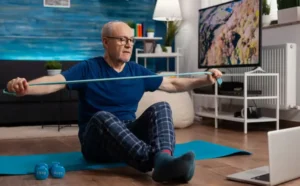

You don’t need an hour-long workout to stay active. For seniors, even a 10-minute workout can be a convenient way to add movement to the day.
A short routine can combine strength, balance, mobility, and light cardiovascular activity without requiring a gym or complicated equipment.
For adults aged 65 and older, the CDC recommends a combination of aerobic activity, muscle-strengthening activities, and balance activities each week. If you’re currently inactive, starting with shorter sessions and gradually increasing your activity is a practical approach.
This simple 10-minute senior workout is designed for beginners and can be performed at home.
What Does a 10-Minute Senior Workout Include?
A balanced short workout can include:
- Warm-up: 1–2 minutes
- Strength: 3–4 minutes
- Balance: 2 minutes
- Mobility: 2 minutes
- Cooldown: 1 minute
You don’t need to perform every exercise quickly. Focus on controlled, comfortable movements.
If you need additional rest, take it.
Before You Start
Choose a safe area with enough room to move.
You may want to have:
- A sturdy chair
- Comfortable shoes
- A clear floor
- Water nearby
If you have significant balance problems, keep a sturdy support nearby during standing exercises.
If you have a medical condition, recent injury, or concerns about starting exercise, speak with a healthcare professional before beginning a new workout routine.
Minute 1: Gentle Marching
Start with a simple warm-up.
How to Do It
- Stand upright near a sturdy support if needed.
- Lift one knee slightly.
- Lower it.
- Lift the other knee.
- Continue alternating.
Move at a comfortable pace.
Make It Easier
If standing is difficult, perform the exercise while seated.
Time: 60 seconds
Minute 2: Shoulder Rolls and Arm Movements
Now prepare the upper body.
Shoulder Rolls
- Relax your shoulders.
- Slowly roll them backward.
- Repeat several times.
- Reverse the direction.
Then gently move your arms forward and to the sides if comfortable.
Why Include It?
These movements can help get the upper body moving before the strength portion of the workout.
Time: 60 seconds
Minute 3: Sit-to-Stand
Sit-to-stands are one of the most useful beginner exercises for seniors.
How to Do It
- Sit on a sturdy chair.
- Place both feet firmly on the floor.
- Lean slightly forward.
- Push through your feet to stand.
- Slowly lower yourself back into the chair.
Beginner Target
Perform 5–10 repetitions.
Why Try It?
The movement is similar to getting up from a chair, which makes it particularly practical for everyday life.
Time: 60 seconds
Minute 4: Wall Push-Ups
Wall push-ups provide a beginner-friendly way to work the upper body.
How to Do Them
- Stand facing a wall.
- Place your hands against it.
- Step back slightly.
- Bend your elbows.
- Bring your body toward the wall.
- Push yourself back.
Keep your movements controlled.
Beginner Target
Perform 5–10 repetitions.
Time: 60 seconds
Minute 5: Calf Raises
Calf raises can be performed while holding a sturdy chair for support.
How to Do Them
- Stand behind a sturdy chair.
- Hold the chair if needed.
- Slowly raise your heels.
- Pause briefly.
- Lower your heels.
Beginner Target
Perform 8–12 repetitions.
Don’t rush the movement.
Time: 60 seconds
Minute 6: Seated Leg Extensions
Sit on a sturdy chair and work one leg at a time.
How to Do It
- Sit upright.
- Keep one foot on the floor.
- Slowly straighten the opposite leg.
- Pause briefly.
- Lower it.
- Switch legs.
Beginner Target
Perform approximately 5–8 repetitions per leg.
Avoid swinging your legs.
Time: 60 seconds
Minute 7: Supported Balance Exercise
Balance training is an important part of senior fitness.
Supported Single-Leg Stand
- Stand beside a sturdy chair or countertop.
- Hold the support.
- Lift one foot slightly from the floor.
- Hold for a comfortable amount of time.
- Lower the foot.
- Switch sides.
Don’t worry about holding the position for a long time.
Safety First
If you feel unstable, keep both hands on the support or choose another balance exercise.
The CDC recommends balance activities as part of physical activity for adults aged 65 and older.
Time: 60 seconds
Minute 8: Weight Shifts
Weight shifting is another simple balance activity.
How to Do It
- Stand with your feet comfortably apart.
- Hold a sturdy support if necessary.
- Slowly shift your weight toward your right side.
- Return to the center.
- Shift toward your left side.
- Continue slowly.
Keep your movements controlled.
Why Include It?
It gives you an opportunity to practice controlled movement while keeping both feet on the floor.
Time: 60 seconds
Minute 9: Mobility Movements
Now focus on comfortable movement.
Try:
Ankle Circles
Move each ankle gently in circles.
Shoulder Rolls
Roll your shoulders slowly.
Gentle Torso Rotation
While standing or seated, gently rotate your upper body from side to side.
Don’t force the movement.
Time: 60 seconds
Minute 10: Cool Down
Finish with gentle movement.
Walk slowly around the room or march gently in place.
Then take a few comfortable breaths and relax your shoulders.
If you’d like, finish with gentle stretches.
Time: 60 seconds
Your Complete 10-Minute Workout
Here’s the routine at a glance:
| Minute | Exercise | Main Focus |
|---|---|---|
| 1 | Gentle marching | Warm-up/Cardio |
| 2 | Shoulder rolls + arm movements | Mobility |
| 3 | Sit-to-stands | Strength |
| 4 | Wall push-ups | Upper-body strength |
| 5 | Calf raises | Lower-body strength |
| 6 | Seated leg extensions | Leg strength |
| 7 | Supported single-leg stand | Balance |
| 8 | Weight shifts | Balance |
| 9 | Mobility movements | Flexibility/Mobility |
| 10 | Gentle walking + breathing | Cooldown |
What If 10 Minutes Feels Too Difficult?
That’s completely okay.
You don’t have to complete the entire routine immediately.
Try starting with:
2–5 minutes
Then gradually increase your workout time.
You can also perform the exercises while seated if standing for long periods is difficult.
Seated Alternatives
Instead of standing exercises, try:
- Seated marching
- Seated leg extensions
- Seated heel raises
- Seated toe raises
- Seated arm movements
- Seated shoulder rolls
As your strength and confidence improve, you can gradually introduce appropriate standing exercises.
What If 10 Minutes Feels Too Easy?
If you’re already comfortable with the routine, gradually increase the challenge.
You could:
- Add repetitions
- Increase walking time
- Add another set
- Use a light resistance band
- Add light weights
- Increase your weekly exercise frequency
Don’t increase everything at once.
A gradual progression can make your routine easier to maintain.
How Often Should You Do a 10-Minute Workout?
A 10-minute workout can be used as part of a larger weekly exercise routine.
For example:
| Day | Activity |
|---|---|
| Monday | 10-minute workout |
| Tuesday | 10–20-minute walk |
| Wednesday | 10-minute workout |
| Thursday | Light mobility |
| Friday | 10-minute workout |
| Saturday | Walking or recreational activity |
| Sunday | Rest or gentle movement |
For adults aged 65 and older, the CDC recommends working toward 150 minutes of moderate aerobic activity per week, along with muscle-strengthening activities at least two days per week and balance activities.
If you’re currently inactive, start with what you can comfortably manage.
Can You Do This Workout Every Day?
You can include light movement every day, but you don’t necessarily need to perform the same strength workout every day.
A better approach is to vary your activities.
For example:
Monday: Strength + balance
Tuesday: Walking
Wednesday: Mobility
Thursday: Strength + balance
Friday: Walking
Saturday: Light recreational activity
Sunday: Rest
This gives your body opportunities to recover between more challenging sessions.
Can You Use a Vibration Plate With This Workout?
A vibration plate may be incorporated into some home exercise routines.
For example, appropriate exercises may include:
- Basic standing
- Calf raises
- Gentle weight shifts
- Supported mini squats
However, vibration training should not replace regular walking, strength training, balance exercises, or other physical activity.
If you’re new to vibration training, start conservatively and follow the equipment manufacturer’s instructions.
Seniors with health conditions, recent injuries, or significant balance concerns should seek professional advice before using a vibration plate.
Safety Tips for a 10-Minute Senior Workout
Even a short workout should be performed carefully.
Use a Sturdy Chair
Choose a chair that doesn’t roll or slide.
Clear the Floor
Remove rugs, cords, and other obstacles.
Wear Supportive Shoes
Choose comfortable footwear with good traction.
Keep Support Nearby
This is particularly important during balance exercises.
Move Slowly
Don’t rush through repetitions.
Take Breaks
You can pause whenever necessary.
Don’t Exercise Through Concerning Symptoms
Stop exercising if you experience unusual pain, dizziness, chest discomfort, fainting, severe shortness of breath, or other concerning symptoms, and seek appropriate medical advice.
Common Mistakes to Avoid
Trying to Complete the Workout Too Quickly
Ten minutes doesn’t mean you have to rush.
Skipping the Warm-Up
Even a short workout benefits from a gradual start.
Using Poor Technique
Controlled movements are more important than speed.
Ignoring Balance
Include appropriate balance exercises regularly.
Doing Too Much Too Soon
Progress gradually.
Forgetting Rest
Your body needs time to recover.
Frequently Asked Questions
Is a 10-minute workout enough for seniors?
A 10-minute workout can be a useful starting point, particularly for people who are currently inactive. However, it should ideally be combined with other physical activity throughout the week.
Can seniors exercise for only 10 minutes a day?
Yes. Ten minutes can be a practical starting point. Over time, you can gradually add more activity and work toward recommended weekly activity levels.
What is the best 10-minute workout for seniors?
A balanced routine can combine gentle cardio, strength exercises, balance activities, and mobility movements.
Can I do this workout sitting down?
Many exercises can be adapted to a chair, including marching, leg extensions, heel raises, and upper-body movements.
How often should seniors do strength exercises?
The CDC recommends muscle-strengthening activities at least two days per week for adults aged 65 and older.
Can seniors build strength with short workouts?
Yes. Short workouts can provide useful resistance exercise, particularly when performed consistently and progressed gradually.
Final Thoughts
You don’t need a long workout to get started.
This 10-minute senior workout combines simple exercises for strength, balance, mobility, and movement—all of which can be performed at home with little or no equipment.
Start at a comfortable level, take breaks when needed, and gradually increase your activity as your fitness improves.
If you’re new to exercise, remember:
10 minutes is better than doing nothing.
The goal isn’t to finish the hardest workout. The goal is to keep moving consistently and safely.